
Introduction
Education is evolving faster than ever, yet many digital learning platforms still rely on outdated and rigid systems. Learners expect engaging and personalized experiences, institutions need deeper visibility into performance, and educators want tools that reduce manual effort rather than increase it. This widening gap between modern expectations and traditional systems is forcing education providers to rethink how digital learning solutions are designed and delivered.
What Is AI in Education?
AI in education refers to the use of artificial intelligence technologies—such as machine learning, natural language processing, and predictive analytics—within educational software to improve learning outcomes, automate operations, and deliver personalized experiences at scale. Instead of relying on fixed rules or static content, AI-driven education systems analyze learner behavior, performance data, and engagement patterns to make real-time decisions.
AI in education allows platforms to adapt learning paths based on individual progress, identify knowledge gaps automatically, and provide actionable insights to educators and institutions. It also reduces manual workload by automating tasks such as grading, progress tracking, reporting, and learner support. The result is smarter education software that continuously improves based on data rather than assumptions.
How AI in Education Works
AI systems collect and analyze data from learner interactions—such as quiz results, time spent on lessons, engagement levels, and content preferences. Using this data, AI models detect patterns and predict outcomes, such as which learners may struggle or drop out. Based on these insights, the system adjusts content difficulty, recommends additional resources, or alerts instructors for early intervention. Over time, the platform becomes more accurate and effective as it learns from more data.
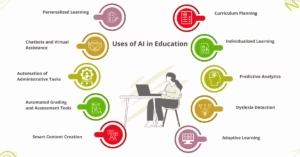
Examples of AI in Education
Example 1: Personalized Learning Platforms
AI-powered learning platforms track student performance and identify areas where learners struggle, such as algebra concepts. The system then offers extra practice, simpler explanations, or targeted exercises, while advanced learners receive more challenging content. This approach improves engagement and learning efficiency.
Example 2: Automated Grading and Feedback
In large online courses, AI can automatically grade quizzes, assignments, and even written responses. Students get instant feedback, and educators save significant time, allowing them to focus more on teaching quality.
Example 3: Predictive Analytics for Student Success
By analyzing attendance, engagement, and performance data, AI can identify students who may fall behind. Institutions can act early with support, improving retention and student outcomes.
Example 4: AI Tutors and Learning Assistants
AI chatbots and virtual tutors help students by answering questions, explaining topics, and guiding coursework. These tools offer 24/7 support, making them ideal for remote and self-paced learning.
Example 5: Institutional Insights and Optimization
AI dashboards provide insights into course performance, learner engagement, and skill gaps. Institutions use this data to improve curricula, allocate resources better, and enhance overall learning results.
Why AI in Education Matters
AI in education transforms traditional learning systems into intelligent, adaptive platforms. It improves personalization, reduces operational costs, enhances decision-making, and scales education without compromising quality. As digital learning continues to grow, AI is becoming the foundation for modern, efficient, and results-driven educational software.
The Role of AI in Education Software Development
AI plays a key role in turning traditional education software into smart, adaptive learning systems. Instead of following fixed rules, AI-powered platforms analyze how learners interact with content, track performance, and understand learning patterns in real time. Based on this data, the software can automatically adjust lessons, assessments, and learning paths to match individual needs.
This means learners receive the right content at the right time, while educators gain clearer insights into progress and challenges. As the system learns from more data, it becomes more accurate and effective over time. This ability to adapt, learn, and improve continuously is what makes AI the foundation of modern education software and EdTech innovation.
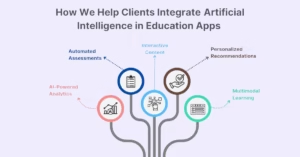
Key AI-Powered Capabilities in Educational Software
One of the most impactful uses of AI in education is personalization. AI creates adaptive learning paths that adjust content difficulty, pacing, and format based on individual learner needs. Intelligent assessments evaluate not just outcomes but learning behavior, providing deeper insights into strengths and gaps. Automated grading and feedback reduce instructor workload while delivering faster responses to learners. Predictive analytics identify learners at risk of disengagement or failure, enabling early intervention. AI-powered content recommendations ensure learners always receive relevant, goal-oriented material, improving completion rates and knowledge retention.
AI for Educators and Institutions
For educators, AI reduces operational burden and improves decision-making. Automated processes handle repetitive tasks such as grading, attendance tracking, and reporting. AI analytics provide real-time visibility into learner progress, engagement levels, and performance trends. Institutions can identify gaps in curriculum effectiveness, optimize course design, and allocate resources more efficiently. By shifting focus from administration to instruction, AI empowers educators to deliver higher-quality learning experiences.
AI for Learners: Better Experience, Better Results
From a learner’s perspective, AI-driven education software creates more engaging and effective learning journeys. Adaptive systems respond to individual progress, ensuring learners are neither overwhelmed nor under-challenged. Real-time feedback helps learners correct mistakes instantly and stay motivated. AI-driven personalization supports self-paced learning while maintaining clear goals and outcomes. These capabilities improve engagement, reduce dropout rates, and help learners achieve measurable results faster.
Building AI-Driven Educational Software: Key Considerations
Implementing AI in education software requires careful planning. High-quality, structured data is essential for reliable AI outcomes. Privacy and data security must be prioritized, especially when handling student information. Ethical AI practices ensure transparency and fairness in decision-making. Integration with existing learning management systems and tools is critical for adoption. Scalability should be built into the architecture so platforms can grow without performance degradation. When these factors are addressed early, AI-powered education software delivers sustainable long-term value.
The Future of AI in Education and EdTech Platforms
The future of learning is intelligent and adaptive. AI in education will enable platforms to personalize learning paths, adjust content in real time, and provide instant feedback based on student performance. AI-powered tutors and virtual assistants will offer continuous support while reducing manual work for educators. As education platforms collect more data, AI systems will continuously improve, making learning more engaging, efficient, and outcome-driven. Institutions gain better insights, learners get personalized experiences, and educators can focus on teaching rather than administration.
Conclusion:
AI in education is the foundation of modern, scalable, and effective educational software. By enabling personalization, automation, predictive insights, and continuous optimization, AI helps institutions overcome traditional limitations and deliver better learning outcomes. Education platforms that embrace AI today are better positioned to meet learner expectations, improve efficiency, and remain competitive in an increasingly digital education landscape.